

Wedge Wire Screen Panel Lifecycle and Maintenance Value
Welcome to Hebei YUBO Filtration Equipment Co.,Ltd.
Wedge wire screen panels are widely used in water treatment, mining, food processing, pulp and paper, and chemical industries due to their high strength, precise slot openings, and excellent resistance to clogging. While their initial purchase cost is often higher than wire mesh or perforated plate alternatives, their long service life and reduced maintenance requirements frequently result in a lower total cost of ownership.
Understanding the factors that influence lifecycle and maintenance value can help operators maximize productivity while minimizing downtime and replacement costs.
Why Lifecycle Value Matters
When evaluating screening equipment, focusing solely on purchase price can be misleading. The true cost of a screen panel includes installation, maintenance, downtime, and replacement expenses throughout its operating life.
A wedge wire screen panel may cost more initially, but its durability and self-cleaning characteristics often reduce maintenance frequency and extend replacement intervals, resulting in significant long-term savings.
Factors That Influence Panel Lifespan
Several operational and design factors directly affect the service life of a wedge wire screen panel.
Material Selection
Material choice is one of the most important factors affecting durability.
|
Material |
Typical Service Life |
|---|---|
|
SS304/304L |
5–8 Years |
|
SS316L |
8–15 Years |
|
Duplex Stainless Steel |
15–25+ Years |
|
Super Duplex Stainless Steel |
20–25+ Years |
316L stainless steel is commonly used in water treatment and mild chemical applications, while Duplex and Super Duplex alloys are preferred for seawater and highly corrosive environments.
Abrasive Wear
Applications involving sand, coal, minerals, or other abrasive solids can gradually wear slot edges and reduce screening efficiency. Proper material selection and flow control help minimize wear.
Flow Velocity
Excessive flow velocity increases particle impact and accelerates erosion. Maintaining recommended operating conditions helps extend panel life and preserve slot accuracy.
Chemical Exposure
Aggressive chemicals can cause corrosion and weaken structural components over time. Matching alloy selection to process chemistry is essential for long-term reliability.
Common Failure Mechanisms
Even highly durable wedge wire panels can experience wear over time.
Typical causes of failure include:
-
Abrasive particle erosion
-
Chemical corrosion
-
Vibration fatigue
-
Thermal cycling stress
-
Support rod deformation
Regular inspections can identify these issues before they result in costly shutdowns or panel replacement.
Wedge Wire vs. Other Screening Technologies
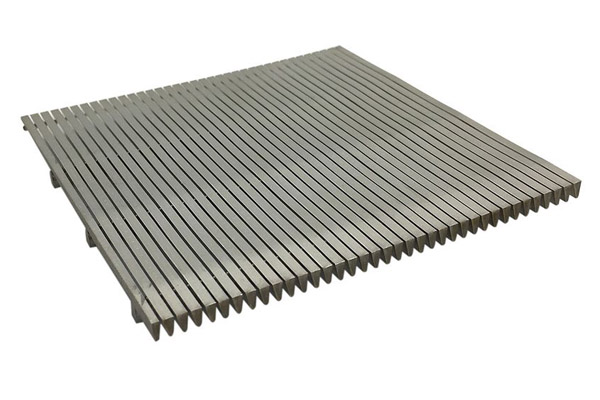
Compared with traditional screening solutions, wedge wire panels often provide superior lifecycle value.
|
Factor |
Wedge Wire Panel |
Wire Mesh |
Perforated Plate |
|---|---|---|---|
|
Service Life |
High |
Low |
Medium |
|
Open Area |
High |
Medium |
Low |
|
Clogging Resistance |
Excellent |
Moderate |
Moderate |
|
Cleaning Frequency |
Low |
High |
Medium |
|
Downtime |
Low |
High |
Medium |
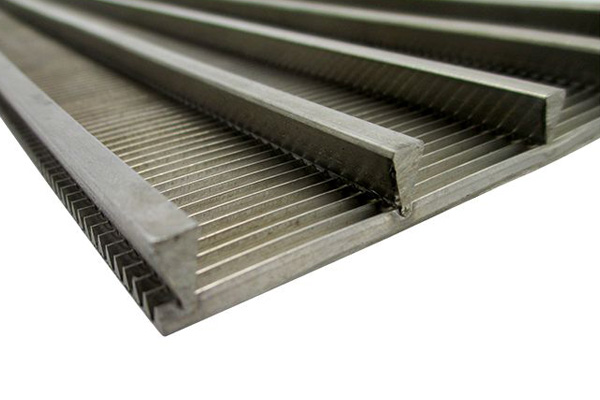
The V-shaped wire profile creates a widening slot that prevents particles from becoming trapped, improving operational reliability and reducing maintenance requirements.
Reducing Downtime Through Proper Maintenance
One of the major advantages of wedge wire technology is its self-cleaning design.
During backwash cycles, the reverse flow helps remove accumulated particles from the screen surface. This can significantly reduce manual cleaning requirements and improve process continuity.
Common cleaning methods include:
-
Clean-In-Place (CIP) systems
-
High-pressure water jet cleaning
-
Airburst cleaning
-
Mechanical brushing where applicable
Because fouling is minimized, facilities often experience fewer maintenance shutdowns and more stable production rates.
Recommended Maintenance Practices
A preventive maintenance program can further increase service life.
|
Inspection Item |
Recommended Frequency |
|---|---|
|
Visual Inspection |
Monthly |
|
Pressure Monitoring |
Weekly |
|
Slot Wear Assessment |
Quarterly |
|
Structural Inspection |
Annually |
Operators should also monitor vibration, mounting conditions, and signs of corrosion to prevent premature failures.
Lifecycle Performance Across Industries
Service life varies depending on operating conditions.
|
Industry |
Typical Service Life |
|---|---|
|
Water Treatment |
10–20 Years |
|
Food Processing |
8–15 Years |
|
Pulp & Paper |
8–15 Years |
|
Mining & Minerals |
5–10 Years |
|
Petrochemical |
10–25 Years |
Proper material selection and maintenance practices can significantly extend these ranges.
Return on Investment
Although wedge wire screen panels generally require a higher initial investment, they often deliver a faster return through:
-
Reduced maintenance labor
-
Lower cleaning frequency
-
Fewer replacements
-
Less process downtime
-
Improved operational efficiency
In many industrial applications, the longer service life of a wedge wire panel can reduce lifecycle costs by more than 50% compared to conventional screening solutions.
Best Practices for Maximizing Panel Life
To achieve the greatest maintenance value and lowest operating cost:
✓ Select materials suited to the process environment
✓ Maintain recommended flow velocities
✓ Monitor pressure and vibration levels
✓ Perform routine inspections
✓ Use appropriate cleaning methods
✓ Address wear and corrosion early
These simple practices can significantly extend service life while maintaining consistent screening performance.
FAQ
How long do wedge wire screen panels typically last?
Most wedge wire panels last between 5 and 15 years, while Duplex and Super Duplex designs can exceed 25 years in suitable operating conditions.
Why do wedge wire panels require less maintenance?
Their V-shaped profile creates a self-cleaning effect that reduces particle buildup and minimizes clogging.
Can wedge wire screen panels be repaired?
In many cases, localized damage can be repaired through welding or refurbishment, extending panel service life.
What material offers the longest service life?
Duplex and Super Duplex stainless steels generally provide the best combination of corrosion resistance and durability.
How often should panels be inspected?
Monthly visual inspections and annual structural evaluations are commonly recommended for industrial applications.
Wedge wire screen panels offer exceptional lifecycle value through their combination of strength, corrosion resistance, and low-maintenance performance. While the initial investment may be higher than alternative screening technologies, their longer service life, reduced downtime, and lower maintenance requirements often result in significantly lower total ownership costs.
For facilities seeking reliable, long-term screening performance, optimizing material selection, operating conditions, and maintenance practices is the key to maximizing both service life and return on investment.
Who We Are?
YUBO Company is the professional supplier in China. It is always committed to study, design and produce wedge wire screen products for industry filter.Now its products include wedge wire screen panel, filter nozzle, cylinder,basket,pipe, Sieve Bend Screen,Profile Screen Laterals,etc.
What Is wedge wire screen
Wedge Wire Screens is a sieve made from looped wires formed into a deep wedge-shaped section. The wedge wire screens can be supplied in various shapes and forms as FLAT PANELS, CURVED SIEVE BENDS, CONICAL BASKETS, CYLINDERS, TROUGHS DISKS either in one one piece or in segments.
our advantages
- Professtional, we have our Engineering designers
- We are the factory
- Quality is our cluture and soul
- Customized. We produce and design according to your need
- Low cost and high efficient
Compare Products